
Teaching Fundamentals Workbook
Your Level 4 Teaching Fundamentals Workbook
Welcome to Your Level 4 Teaching Fundamentals WorkbookCongratulations on beginning your journey towards the NCFE-accredited Level 4 Certificate in Teaching Fundamentals with Grad2Teach.
This page is your one-stop hub for all the resources, templates, and proformas you’ll need throughout the course. Whether you’re completing reflective journals, preparing your school-based project, or working through your assessments, you can return here at any time to download the most up-to-date documents.
Our goal is to make your training experience clear, structured, and supportive — helping you develop the professional values, skills, and knowledge you’ll need for a successful career in education. By combining real classroom practice with research-informed learning, this qualification will give you the tools to make a meaningful impact in your school community.
Save this page to your favourites — it will be updated with any new resources, guidance, or assessment materials as you progress through the programme.
Assessment guide and key documents
Please use the below document as a guide to help you understand what counts as a pass under each Assessment Objective (AO) for each piece of work and what your assessors are looking for when they are marking your work: Assessment Guide to Weekly Tasks
You'll be doing a lot of reflective work this term in your Independent Learning Journals (ILJs), and so it's good to think about what good reflective writing actually sounds like: How to write reflectively support sheet
The purpose of the below document is to clarify what different assessment command words mean e.g. examine or analyse and what examiners are actually looking for in your written responses, using clear definitions and concrete examples. Please access this document here: Assessment Command Word Key and Examples
We would also like you to read the below documents, as they will help you to become familiar with the observation process. Please ignore any references to Professional Assessors (PAs) in the documents.
G2T Observation Policy and Process 2026
Lesson Planning Support Document - complete your lesson observation plan on this document
Grad2Teach Lesson Observation form for ISMs and PAs 2024
Post-Observation Reflection Plan (PORP)
Questions to Assist Focused TLA Thinking
Week 1: Induction & Settling In
Tasks & Downloads
1. Attend your first training sessions on Teams with G2T - TD1 (Training Day 1).
2. Complete your first Training Day 1 Reflection (AO1/5.1/AO2/1.1)
3. Complete your W1 Settling-In Checklist
(Remember to download the How to write reflectively support sheet from the key documents tab above to help you with your ILJs)
3. Complete you first Independent Learning Journal: W1 ILJ Settling in AO1 1.1 3.1 AO2 1.1
4. Review and sign the AI Use Declaration FormWeek 2: Getting to know your school
Tasks & Downloads
- Complete your Week 2 ILJ: W2 ILJ - School Research reflection AO1 1.1 and 3.1
- Keep working on your Settling In Checklist here.
Week 3: Understanding Safeguarding & Professional Responsibility; Prep for Study Group 1
Tasks & Downloads
- Complete W3 ILJ - Safeguarding AO1 1.2 and AO3 3.2-3.4
- Use the DSL Meeting Form
- Review the Study Group Materials for this week’s session.
This includes: - Begin Assignment 1 using the Safeguarding Assignment Pack
This includes:
Week 4: Understanding how to manage behaviour
Tasks & Downloads
- Begin by completing your independent journal: W4 Independent Learning Journal - Behaviour Policy and Practice
- Observe a colleague using effective strategies to manage behaviour using the Observing Colleagues -Behaviour Wk4.
- Reflect on 2 takeaway strategies from the observation using this: Evaluation of two strategies [behaviour]
- Refer to the Behaviour Management Guidance and to a past student's exemplar form to help you understand the task: student exemplar
- Review two example behaviour Policies: Michaela and Rushcliffe for comparison and context.
PPA 1 Mini Project - Bloom's Taxonomy Revised
Well done for completing your first 6 weeks in school! It may not seem like much, but it's quite an important milestone because you'll have started to understand a lot about how schools and teaching work. This Bloom's Mini Project is a chance to look ahead to the theme we'll be moving on to during the training day and next half-term: Planning. By understanding the framework behind Bloom's Taxonomy Revised, you can start to understand how you can get your pupils thinking and learning at different levels of complexity.
Here are the resources to help you complete your paperwork tasks - if they're not here, it's because you can complete them on the Hub itself.
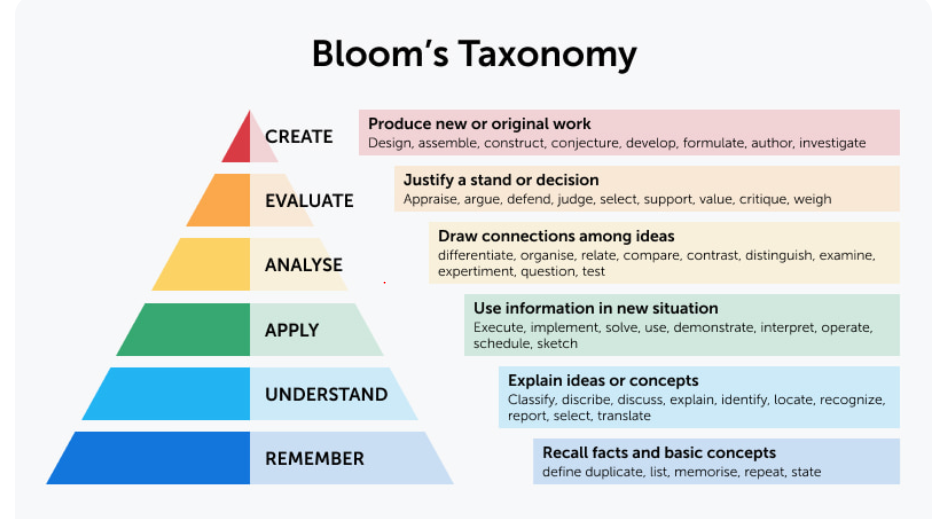
Part 1: What is Bloom's Taxonomy? Watch the video on the Hub. Bloom's Ladder visual
Task 1: Can I recall the main ideas? Complete the Warm-Up Quiz on the Hub.
Task 2: Do I understand how the different thinking levels work? Complete the summary on the Hub.
Part 2: Applying Bloom's Taxonomy in Education - read the page.
Task 3: Can I align the thinking levels with the learning activities? Complete the drag and drop challenge on the Hub. You can try as many times as you like!
Task 4: Can I use the model examples to produce two Bloom's frameworks of lesson ideas? Paperwork - download and complete: Best Fit activity - follow the models to create your own frameworks
Task 5: Can I create a lesson plan based on the Taxonomy? Now's the real test of what you've understood about Bloom's Taxonomy! Applying your understanding to create something new: a lesson. Remember to use the support resources below to help you to plan your lesson or learning experience - you can edit the lesson plan proforma as necessary.
Lesson plan proforma example - please change/adapt as necessary (but don't take out key sections!):
Lesson Planning proforma (harder)
Lesson Planning/learning experience proforma (easier)
Example lesson plans: (you can use these as a rough guide)
Written summary of the What Is Bloom's? YouTube video
Video transcript word for word
Verbs for planning lessons - scaffolding support resource 1 of 2
Verbs for planning lessons - scaffolding support resource 2 of 2
Week 5 - Understanding planning and Community Project Proposal
1. Begin the Proposal for your School Community Project
2. Use the Observing Colleagues - Planning Wk5 template to observe how a colleague has planned their lesson effectively. Use the support resources under points 5 and 6 below to help you.
3. Reflect on 2 takeaway strategies from the observation using this: Evaluation of two strategies (planning)
4. Complete this week's ILJ on Planning once you've completed your Observation of of a Colleague: ILJ - Week 5: Planning
5. Refer to the Planning Guidance document to help you with your observation.
6. You can also look at the Observing Colleagues exemplar if you'd like to see how other trainees have completed similar tasks.
Week 6 - Reflection and review of the first half-term (Tripartite Discussion)
1. Complete the Proposal for your School Community Project
2. Complete your review of the first half-term at your placement school: W6 Independent Learning Journal - Reflection and Review
3. Tripartite Discussion:
Arrange a time and date for a 20-30 minute professional chat with your In-School Mentor and G2T Partnerships Coordinator to consider your progress so far and show what you've learnt. Give your mentor the following paperwork to complete on your behalf: (1) Tripartite record document (for mentor use and trainee prep) (2) Mentor endorsement
Week 7 - Half-term week
Attend TD2 in-person training session -detials will be shared with you on email.
Week 8: TD2 follow-up work and Safeguarding assignment submission
1. Complete your TD2 Workbook activities in the workbook that you were given on the day of your training. Follow the instructions on the Trainee Hub for how to submit your workbook.
2. Start to think about a learning experience that you can plan for a group of pupils that will enable you to begin to put your understanding of good pedagogy into practice. Before you get started, arrange a meeting with your In-School Mentor to agree on a date, duration of experience and suitable group of pupils. You will submit your plan next week.
3. Capture your thoughts about the mentor meeting and the ideas for your lesson on this week's learning journal: W8 ILJ Focus - Mentor meeting and planning process. You can also use the Mentor Meeting form (optional) to record the key discussion points from your mentor meeting ahead of writing your ILJ if you would find this useful.
4. Don't forget to submit your Safeguarding assignment from Week 3 this week.
Week 9: Lesson plan and reflection on creating one
Week 9 is a milestone week because it's a chance to create a lesson or learning experience of your own that you are going to be observed teaching. Remember, you have done quite a bit of preparation for this, between your PPA Week 1 Bloom's project and TD2 training, so it shouldn't feel too daunting. You'll have also spoken to your mentor and hopefully have agreed a suitable time and topic for the lesson.
1. Create your lesson plan
Here are the Lesson plan proformas and examples from your PPA Week 1 resources to help you - please change/adapt as necessary (but don't take out key sections!):
Lesson Planning proforma (harder)
Lesson Planning/learning experience proforma (easier)
Example lesson plans: (you can use these as a rough guide)
Written summary of the What Is Bloom's? YouTube video
Video transcript word for word
Verbs for planning lessons - scaffolding support resource 1 of 2
Verbs for planning lessons - scaffolding support resource 2 of 2
2. Reflect on how you have found the experience of planning your first lesson/learning experience in this week's Learning Journal: W8 Learning Journal
3. Give your mentor a copy of the Feedback and Action Plan form so that they know what feedback you're looking for on your lesson and teaching when they observe you. You can find it here: Feedback and Action Plan form
Week 10 - Feedback, ILJ and Action plan
1. Complete your Feedback and Action Plan based on your discussion with your mentor about the lesson they observed. You can scan in handwritten notes, but you must also submit the completed form: Feedback and Action Plan form
2. Complete your W9 ILJ on the success of your lesson and the status of your School Community Project.
3. Don't forget that your School Community Project is due in next week (Week 11) Proposal for your School Community Project
Week 11: School Community Project submission
1. Please upload your School Community Project this week - you will find further information regarding where to upload any supporting evidence on the topic page titled: School Community Project and Supporting Evidence.
Proposal for your School Community Project
School Community Project submission template
2. Use the Observing Colleagues - Formative Assessment W11 template to observe how a colleague has used assessment effectively during their lesson. Use the support resources under points 5 and 6 below to help you.
Refer to the Formative Assessment Guidance document to help you with your observation: Observing for skills in Formative Assessment
You can also look at the Observing Colleagues exemplar if you'd like to see how other trainees have completed similar tasks :student exemplar - observing others
3. Reflect on 2 takeaway strategies from the observation using this: Evaluation of two strategies (formative assessment)
4. Complete this week's ILJ on Formative Assessment once you've completed your Observation of a Colleague: ILJ - Week 11: Formative Assessment: W11 ILJ Formative Assessment.
Week 12: Understanding Formative Assessment and Looking Ahead
Tasks & Downloads
1. Prepare for this week's Study Group on Formative Assessment. Find the resources under the Study Group links on the Workbook (this page).
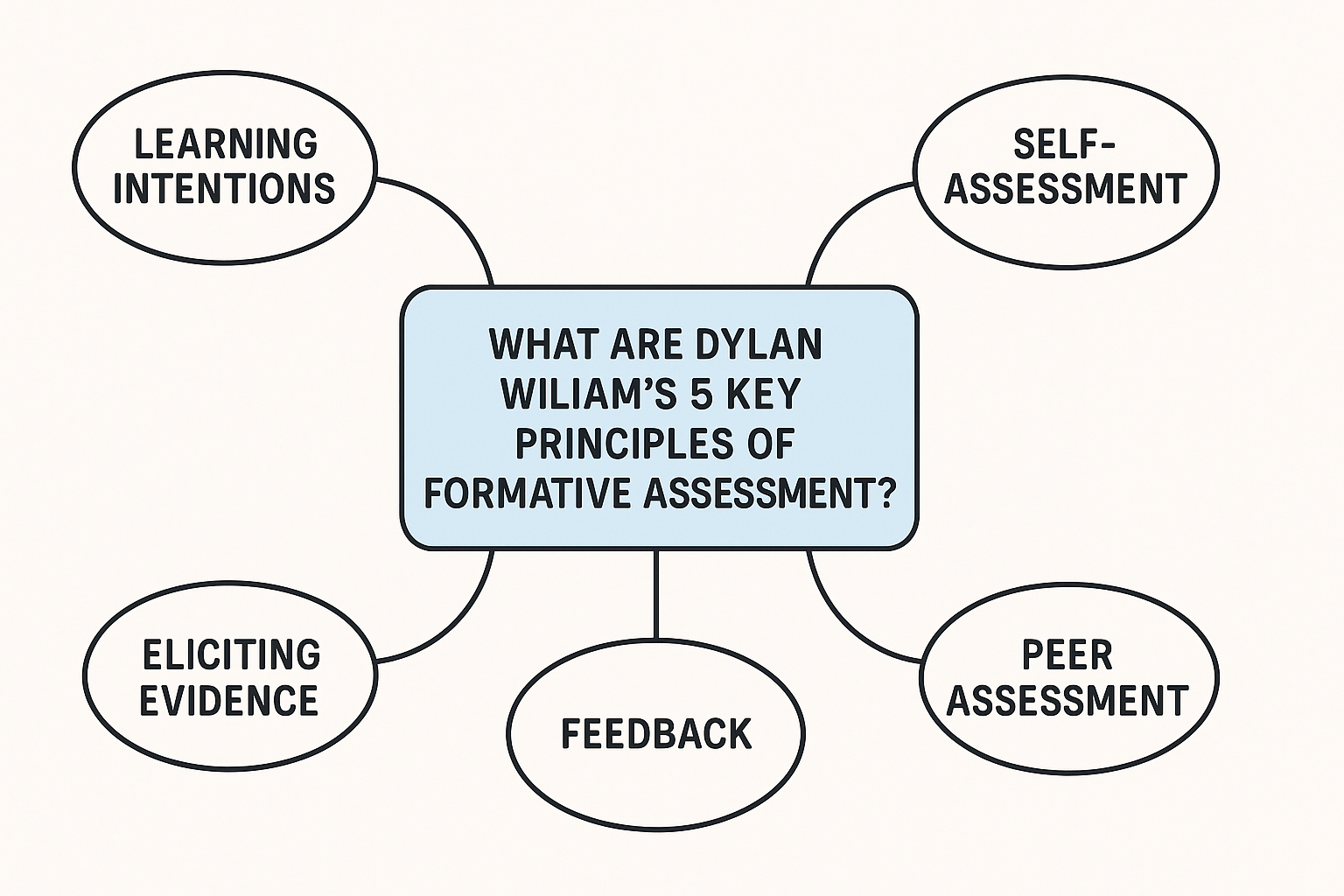
You might also like to revisit this: Dylan Wiliam's 5 Principles of Formative Assessment
2. Looking ahead: whole programme self-assessment and action plan. You may wish to complete this when you've had the chance to speak to your mentor for feedback and advice - it's up to you! L4 Fundamentals - Self-audit
3. Complete your final W12 Independent Learning Journal - and you're finished! Well done (Please note - the W12 journal is for you to give us a bit of personal feedback about your experience at school and of the course, and the content is not linked to any specific course assessment criteria).
Onboarding Session Resources
Onboarding Quiz Questions
To be completed by anyone who did not attend the session. Please email back to T&L.
Onboarding for New Starters - KEY NOTES
Training Day 1: Professional Values Resources
Thank you for attending Part 1 of your TD1 training with us. After each training session, please complete the following form: Learning Form.
Resources
Training Day 1 Professional Values Slides
Fundamentals TD1 Part 1 - Professional Values and Professional Skills - KEY NOTES
Help! I missed the session!
If you missed the training and need to catch up, please work through the student-paced interative session. You can follow these instructions to access it here: Nearpod student-paced Prof Values
Make sure you complete the learning form afterwards as evidence of having caught up with your training: Learning form
Thank you
Training Day 1: Managing Behaviour & Behaviour for Learning Resources - updated!
Thank you for attending Part 2 of your TD1 training with us. After each training session, please complete the following form: Learning Form.
Resources
TD1 Managing Behaviour Slides
Fundamentals TD1 Part 2 - Behaviour For Learning - KEY NOTES
A guide to Bill Rogers - his videos along with summaries of all his techniques.
_____________________________
Help! I missed the session!
If you missed the training and need to catch up, please work through the student-paced interative session. You can follow these instructions to access it here: Nearpod student-paced Managing Behaviour
Make sure you complete the learning form afterwards as evidence of having caught up with your training: Learning form
Thank you
Study Group 1 - Professional Values, Skills and Safeguarding Resources
After each training session, please complete the following form: Learning Form.
If you'd like a little bit of guidance to help you complete your learning form, you can find that HERE
Materials from this week’s session:
Study Group 1 - Professional Values - KEY NOTES
_____________________________
Help! I missed the session!
If you missed the training and need to catch up, please work through the student-paced interative session. You can follow these instructions to access it here: Nearpod student-paced Prof Values
Make sure you complete the learning form afterwards as evidence of having caught up with your training: Learning form
Thank you
Study Group 2 - Behaviour For Learning Focus Resources
After each training session, please complete the following form: Learning Form.
Resources to help prep for the session and revise the themes:
Slides from the session: Behaviour for Learning Study Grp 2 slides
Teaching Fundamentals Study Group 2 - Behaviour for Learning - Key Notes
1. Review and prepare for your second Study Group using the following materials:
Deputy Head’s Advice for Strong Behaviour Management
Trainee's Point of View
Tom Sherrington’s ‘Getting Lessons Started’ Walkthrus
Thrive Behaviour Management Tips
Your corkboard contributions - please re-read:
Training Day 2 Resources - Lesson Planning and Formative Assessment
After each training session, please complete the following form: Learning Form.
DW 5 principles of formative assessment infographic
Formative_Assessment_Strategies_Practical_Guide_for_Trainee_Teachers
Blooms Ladder
20-Bloom-Question-Cues-Chart
Do_Now_Activities_for_Trainees
Blooms Taxonomy (Revised Version)
Quotes 1
Socratic Questioning - RS
Challenge 1 - pathway
Challenge card 2 - accessibility
Challenge card 3 - formative assessment
Blooms-Taxonomy-Question-Stems_by_Top-Hat
Training presentation PDF - Lesson planning and formative assessment TD2
Study Group 3 Resources - Lesson Planning
After each training session, please complete the following form: Learning Form.
You can also access the guidance for completing your study group form HERE.
Fundamentals Study Group 3 - Lesson Planning - KEY NOTES
This week's Study Group is on the topic of Lesson Planning. Please review all of the below resources and consider your responses to the three corkboard questions on the Study Group 3 | Lesson Planning Focus page on the Trainee Hub.
Do_Now_Activities_for_Trainees n
Blooms Ladder
20-Bloom-Question-Cues-Chart
Blooms Taxonomy (Revised Version)
Blooms-Taxonomy-Question-Stems_by_Top-Hat
Socratic Questioning - RS
Study Group 4 Resources - Formative Assessment
After each training session, please complete the following form: Learning Form.
You can also access the guidance for completing your study group form HERE.
Study Group 4 - Formative Assessment KEY NOTES
This week's Study Group is on the topic of Formative Assessment, and it's a good time to review and comment on some of the resources that you were sent after TD2 to support you with formative assessment. You can download them straight from the email you were sent by Teaching and Learning, or access them here.
Please revisit Dylan Wiliam's 5 Principles of Formative Assessment
Read this document - Strategies for Clarifying Learning Intentions - and make note of a strategy that you are not familiar with using.
Also, please have a read of these documents:
DW Principle 1 -Learning Intentions
DW Principle 2: Elicit Prior Learning
DW Principle 3: Feedback than moves learning forward